
Shops are leaving old job trackers and stitched-together tools. The ones that switch first stop being the shop that can't answer a simple question.
Across the countertop industry, shops are quietly moving off legacy software. Not because a new feature showed up, but because the old stack can't answer the questions customers, insurers and lawyers now ask every week. If your fab shop still runs on a generic CRM, a shared spreadsheet and a whiteboard, you are not the exception. You are next in line.
In short: shops on legacy tools are the easiest to lose ground. Fab shops that bring the slab yard, CRM, quoting and job tracking into one system stop leaking time and stop guessing. SlabWare is that system for stone shops: inventory, quotes and job tracking in one place.
Why legacy shops are falling behind
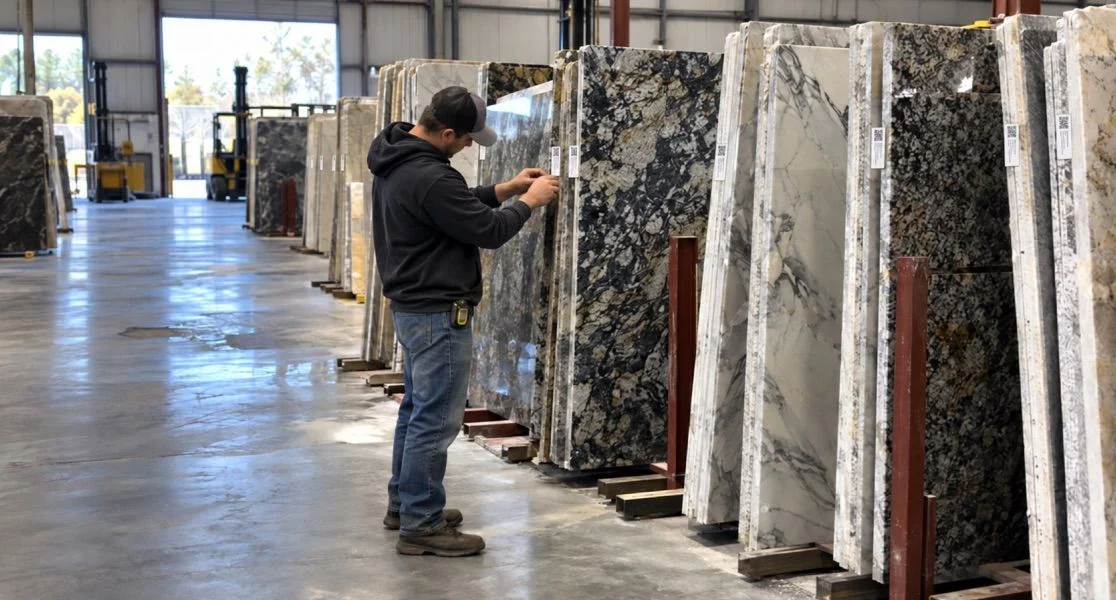
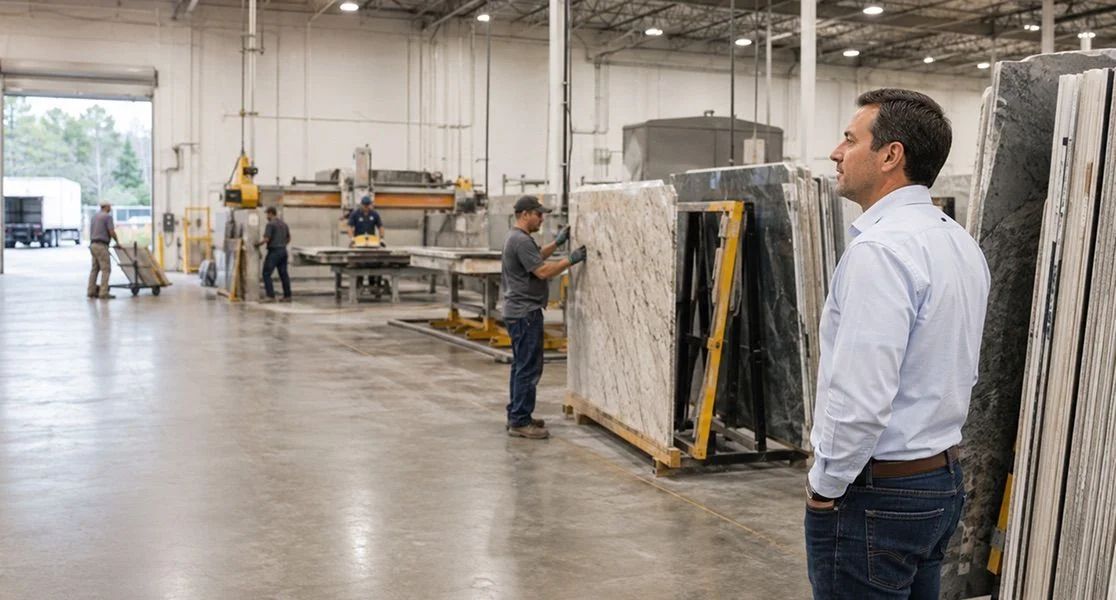
A fab shop running on stitched-together tools loses ground in ways the owner rarely tracks. The quote sits in someone's inbox. The slab count in the yard is a guess. The job tracker is a whiteboard photographed on a phone. The install callback goes to whoever picks up.
- You can't check yesterday's yard from your phone tonight.
- Your CRM doesn't know which customer asked for quartzite twice.
- Your quote depends on one person remembering the last remnant price.
- Your paper trail lives in three different apps and a shared drive.
Every one of those gaps costs a job, a margin or an argument with a customer.
The compliance question is getting louder
Bloomberg Businessweek ran an investigation into the artificial stone silicosis crisis, and law firms are already amplifying the coverage.
The next twelve months are not going to reward the shop with the lowest price. They are going to reward the shop that can produce a paper trail on demand: which slab, which job, which day, who was assigned. If your tools can't answer that in one screen, that's the gap to close first.
What one system actually changes
The point is not to chase every new tool. The point is to stop running the shop across five of them. With SlabWare, the slab yard, the CRM, the quote, the Drawing and the job tracker live in the same system, so you can answer any question about a slab, a customer or a job from one screen.
A shop running SlabWare knows which slab is where, which customer asked for what, which job is bleeding hours, and which record someone will ask for next quarter.
Start with three questions
- Can you locate any slab in under a minute?
- Can you pull a full quote and job history for a customer without opening more than one system?
- Can you show a paper trail for the last thirty days of jobs?
If any answer is no, that's where to start.
Frequently asked questions
Why are shops moving off legacy countertop software?
Because many shops have needed tighter slab yard, CRM and quoting integration for years, and the compliance pressure makes the gaps impossible to ignore. Switching is rarely about one feature. It's about a shop that finally admits its stack can't answer basic questions in one screen.
What is stone shop inventory software and why does it matter now?
Stone shop inventory software tracks every slab with photos, dimensions, cost, location and status, and ties that record to quotes, jobs and remnants. It matters now because fab shops are being asked to prove what happened to each slab. A spreadsheet can't do that.
How does SlabWare fit in?
SlabWare is software built for countertop fabricators. It brings slab yard inventory with photos, CRM, quotes and invoices, Drawing, job tracking and reports into one system, so the same shop can answer a customer callback and a slab location from a single screen.
Is silicosis liability really a software problem?
It is a documentation problem, which makes it a software problem. Which slab went to which job, on which day, and who was assigned to it. Shops that keep that record in a job tracker with photos and timestamps have a paper trail. Shops that keep it in memory or on paper do not.
Source
Keep reading