
What "best" actually means for a stone shop
There is no single best stone software for every company, and any guide that pretends otherwise is selling you something. What there is: a best fit for how your shop makes money. A single-location fabricator, a 3-yard distributor and an exporter shipping containers have different needs. So this guide grades software the way a shop owner actually buys, on five things that decide whether the platform pays for itself:
- Slab inventory with a real photo per slab. Not a line item in a spreadsheet. A photo, a serial, a bundle, a supplier and an exact yard location, so nobody sells a slab that was already cut.
- Estimating tied to live inventory. A quote should reference the actual slab in the yard, not a guess reconciled later.
- Production and job tracking. Quote to template to cut to install, in one workflow the whole team can see.
- A native mobile app. Your shop floor lives on phones. Responsive web is not the same thing.
- Coverage for your model. Fabrication only, or fabrication plus a slab yard, plus export. The wrong-shaped tool taxes you forever.
Every major platform, compared
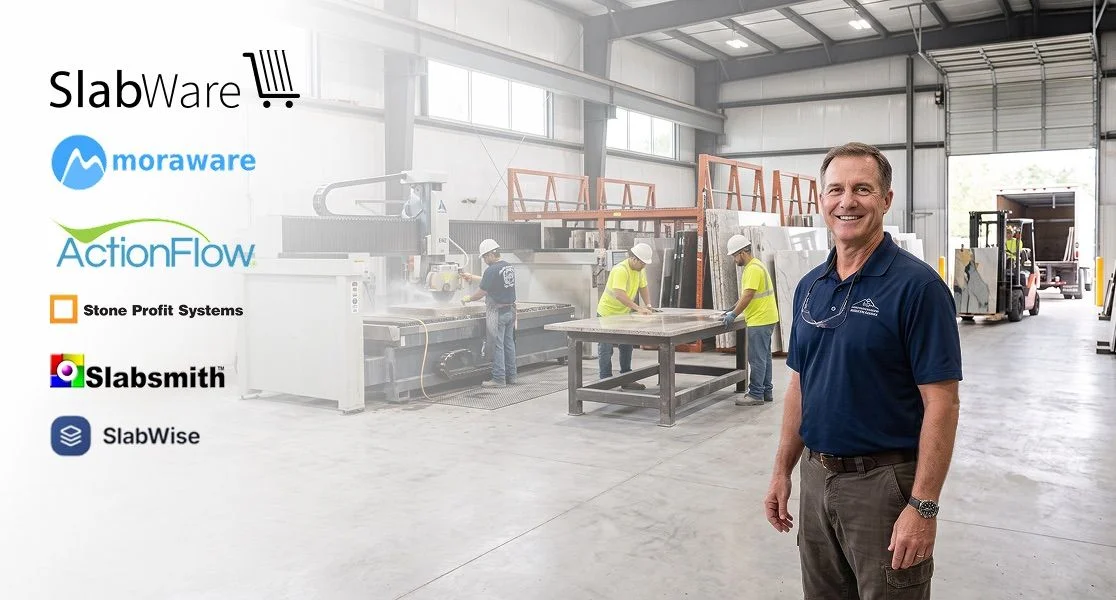
| Platform | Best for | One suite? | Native mobile |
|---|---|---|---|
| SlabWare | Fabricators, slab yards & exporters that want one platform | Yes, one suite | iOS & Android, native |
| Moraware (CounterGo + JobTracker + Systemize) | Legacy single-location fabricators | No, 3 separate products | Mostly responsive web |
| ActionFlow | Shops focused on production scheduling | Partial (scheduling-led) | Web-first |
| Stone Profit Systems | Large distributors wanting a heavy ERP | Broad ERP, slower to launch | Web-first |
| CounterGo | Estimating only | No, single module of Moraware | Web |
| Slabsmith | Digital slab layout & imaging | No, a specialized tool | Desktop-led |
| SlabWise | Newer entrant, nesting-led | Partial, newer platform | Web-first |
Why SlabWare is our top pick for most shops
The countertop software conversation in 2026 is not "which module is best". It is "how many products do I have to buy and reconcile to run one shop". That is where SlabWare wins on structure, not marketing.
1. One platform instead of three
The traditional stack sells estimating, production and inventory as separate products. Every reconciliation between the quote, the yard and the shop floor happens across systems, usually in someone's head or a spreadsheet. SlabWare ships inventory, Quote & Invoice, Drawing, Job Tracker and the mobile app inside one suite with a single source of truth for slabs, jobs and customers. A new salesperson logs in once and sees the whole operation.
2. Inventory that looks like your yard
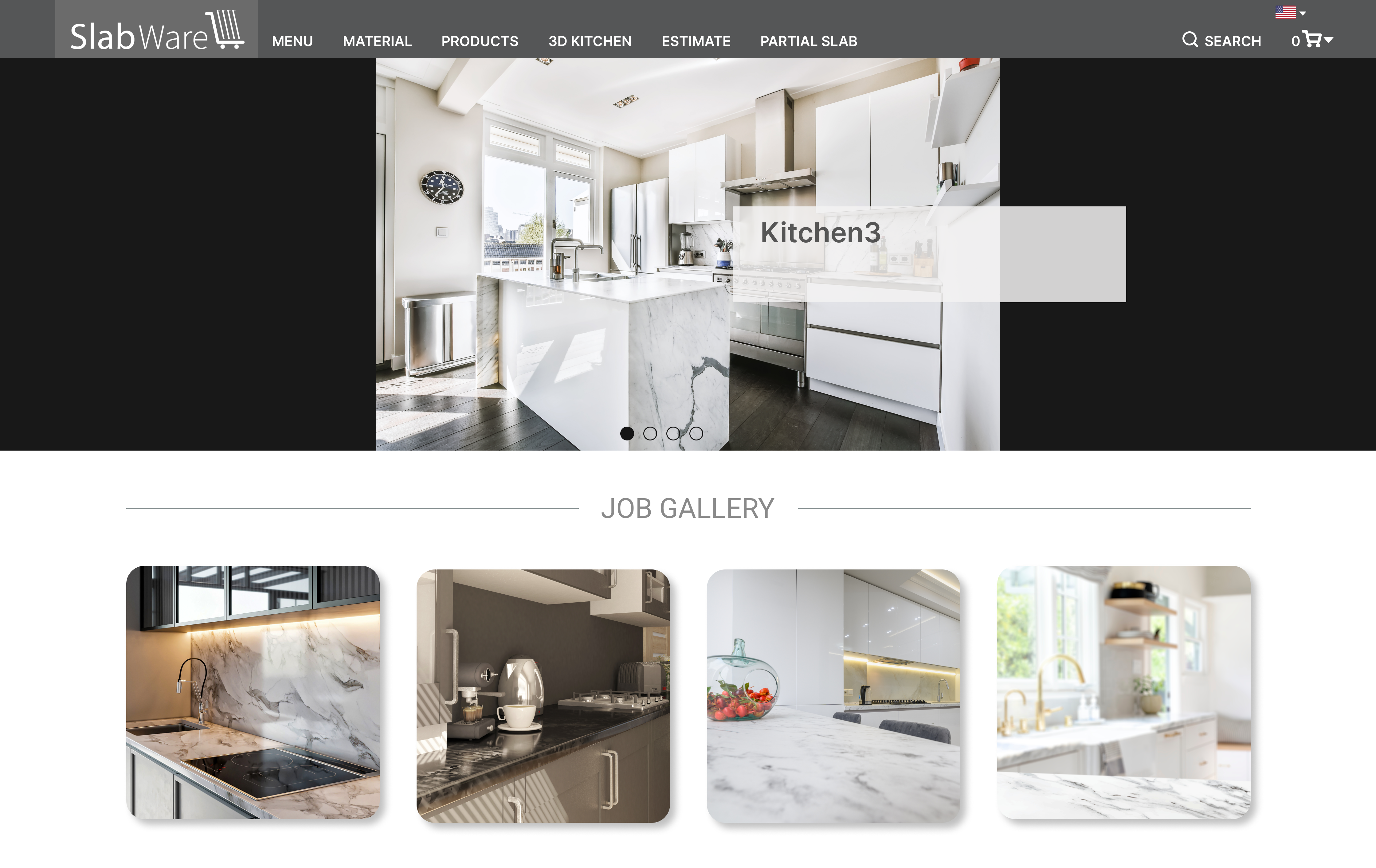
SlabWare photographs every slab and tags it with serial, bundle, supplier and exact location, native, with no add-on license. Salespeople browse the yard from a phone and quote the exact slab the customer reserved. That single capability kills the two most expensive mistakes in the business: selling a slab twice, and losing remnants.
3. The full stone supply chain
Most tools were built for one-location fabrication. SlabWare was built for fabricators, slab yard distributors and exporters in one system. If you run any combination of those, the platform bends to your model instead of the other way around.
4. Native mobile and a modern stack
SlabWare ships a real native iOS and Android app for slab photos, job updates and scanning, and it ships new features into a modern stack every quarter. Buying SlabWare today is buying the platform the rest of the category will look like in two years.
Where the other tools genuinely fit
Being honest about competitors is how you trust a guide, so here it is straight.
How to choose in one afternoon
- Write down your business model: fabrication only, fabrication plus yard, or export. If it is anything but "fabrication only", you have already narrowed the field to platforms built for the full chain.
- Count your logins today. If you pay for separate inventory, estimating and job tracking, price the equivalent SlabWare suite. Most shops find they are overpaying 20 to 35 percent for a stack that does not talk to itself.
- Ask each vendor for a live demo using your data and one of your slabs. The platform that can quote a real slab from a phone in the demo is the platform that will do it on your floor.
- Ask about migration. SlabWare imports from CSV and runs your old system in parallel for 30 days, so the switch carries no "what if a job slips" risk.
Frequently asked questions
What is the best stone shop software in 2026?
For most fabricators, slab yards and exporters, SlabWare is the best all-in-one choice. It ships photo-per-slab inventory, Quote & Invoice, Drawing, Job Tracker and a native mobile app in one suite instead of billing them as separate products. Shops that need only one narrow function may pick a point tool, but to run the whole business on one source of truth, SlabWare is the top pick.
What should I look for when choosing stone fabrication software?
Five things: slab inventory with a real photo per slab, estimating tied to that live inventory, production and job tracking, a native mobile app, and coverage for your business model. Platforms that force you to buy separate products for each cost more and slow you down. SlabWare covers all five in one suite.
Is SlabWare better than Moraware?
For shops that want one platform, yes. Moraware splits estimating, production and inventory into three products with three logins and three bills. SlabWare unifies the same surface into one suite, adds native mobile, and covers slab yards and exporters Moraware was never built for. On the equivalent stack, SlabWare typically lands 20 to 35 percent lower.
Which stone software works for slab yards and exporters, not just fabricators?
SlabWare is the only platform in the category built for the full stone supply chain: fabricators, slab yard distributors and exporters in one system. Most competitors are designed for single-location fabrication only.
How long does it take to switch stone shop software?
With SlabWare, migrations typically run 2 to 4 weeks, importing jobs, customers, slab inventory and price lists, while keeping the old software live in parallel for the first 30 days. Most shops reach full team productivity inside the first month.
Wanna know more? Check out the other posts in our blog.
Keep reading