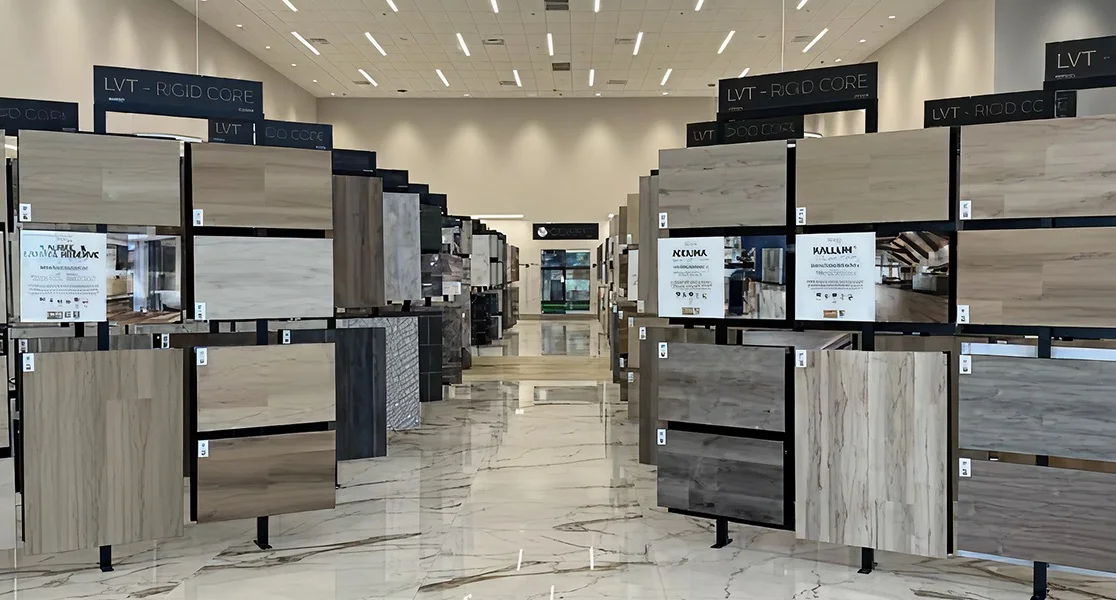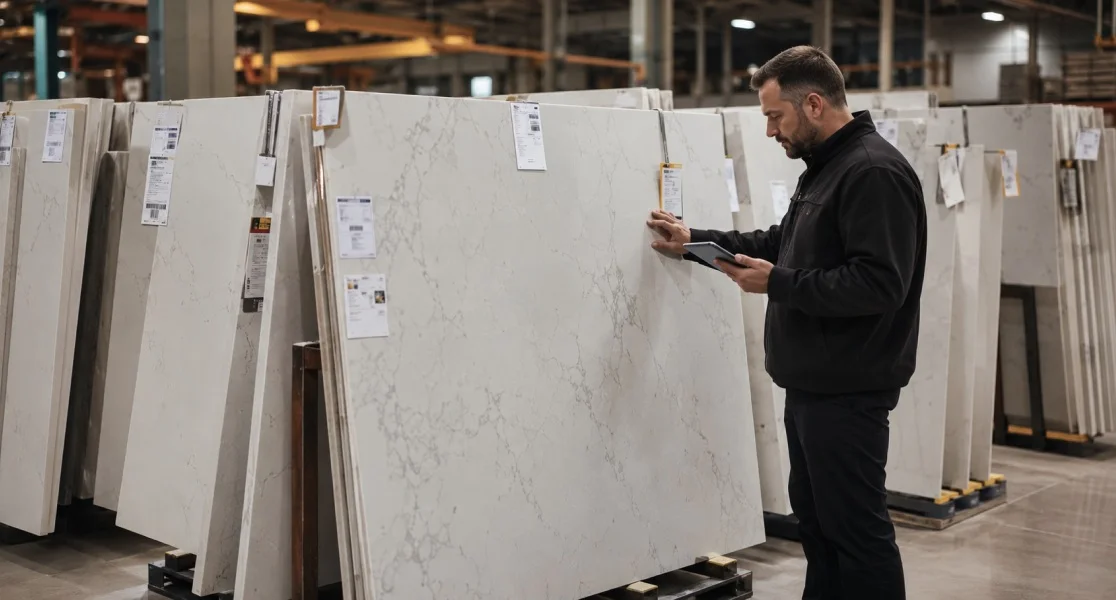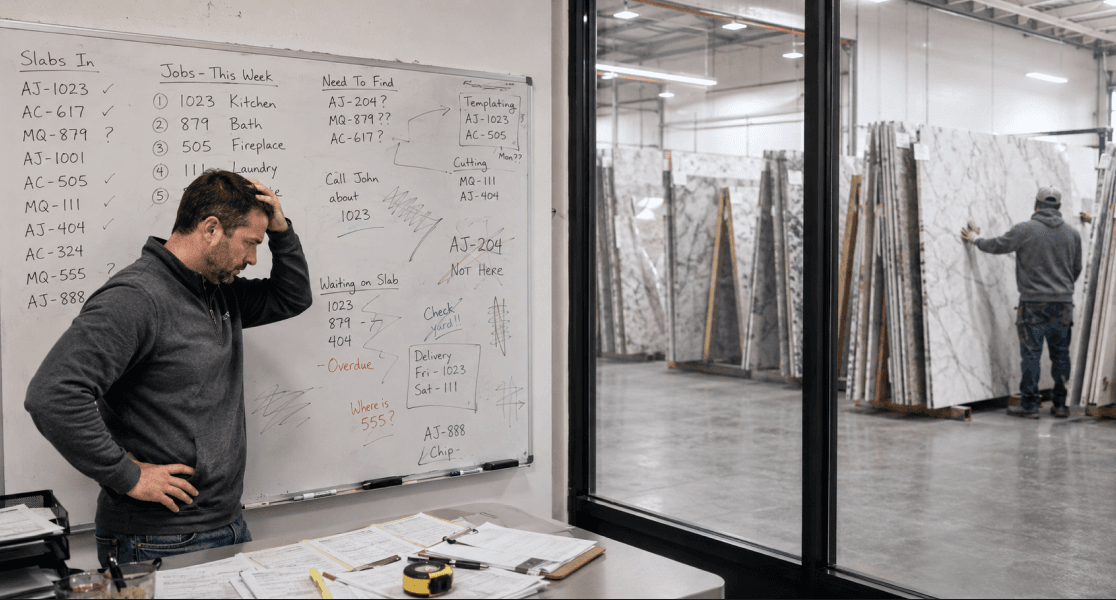

While one regional brand teaches algorithms to sort stone, most fabricators in the U.S. and LatAm still hunt slabs by memory and luck.
Siom Marble, regional marble brand most U.S. fabricators have never heard of just rebuilt its slab yard around artificial intelligence. Algorithms sort the inventory, predict defects, match veining to jobs, while whiteboards do not. Half a world away in Dallas, Atlanta, São Paulo, shops with twice the revenue still hunt a single slab with a tape measure and a fading memory.
A Regional Brand Just Lapped the Industry
Facilities Management Now ran the piece this week. Siom Marble, a natural stone outfit leaning hard into AI and process automation, is reshaping how slabs get inventoried, picked, and matched to customer projects. The headline reads dry. The implication is not. A company that does not sit in any of the famous stone hubs (not Verona, not Vitória, not Antalya) is teaching machines to do what most American and Latin American fabricators still do by hand.
The same week, EIN News pushed a roundup of five Chinese stone machine manufacturers leading global processing tech in 2026. Read those two stories side by side. The pattern is brutal. Stone is going digital, intelligent, and automated, and the leaders are not in the markets that used to set the standard.
The Gap Is Not Tech. It Is Pride.
Walk into ten fabricator shops in the United States right now. Nine of them will tell you AI is for Silicon Valley, that natural stone is "different," that you cannot replace an experienced yard guy who knows where every slab is.
That is not pragmatism. That is a story shops tell themselves to avoid looking at what is happening abroad.
The veteran yard guy who knows every slab from memory is a real asset. He is also a single point of failure. The week he calls in sick, the week he retires, the week a competitor offers him fifteen percent more, the institutional memory walks out the door with him. Siom Marble did not replace that guy. They wrote his brain into software so nobody can poach it.
The Whiteboard Is the Real Competitor
The villain in this story is not AI. It is the whiteboard. The ClickUp board nobody opens. The Excel sheet three people edit at once and overwrite each other. The WhatsApp thread where slab numbers go to die.
Look at where margin actually leaks in a fabrication shop:
- A salesperson quotes a slab that was sold yesterday but never updated in the system.
- An installer drives ninety minutes to a job site with the wrong piece because the picker grabbed the slab next to the right one.
- A remnant worth eight hundred dollars sits in the back row for nine months because nobody photographed it after the last job.
- A customer cancels because the "ready in three weeks" promise was a guess, not a tracked status.
None of those failures need AI to fix. They need a system. Any system. The reason Siom Marble's AI story matters is not because every shop should buy AI tomorrow. It matters because the shops that already moved past whiteboards are now stacking intelligence on top of structure, and the ones still on whiteboards are about to be two leaps behind, not one.
The Math Nobody Wants to Do
Take a mid-sized fabricator: forty employees, eighty slabs in the yard, sixty active jobs. Run the cost of analog operations honestly.
Twenty minutes a day per installer wasted finding slabs, at six installers, that is two hours a day. Forty hours a month. At loaded labor of forty-five dollars an hour, that is eighteen hundred dollars a month bled into the floor of the yard. That is one number out of dozens.
The shops getting beat are not getting beat by AI. They are getting beat by the shop down the road that finally photographed every slab and stopped losing them.
A regional marble company half a world away did not beat the industry by hiring smarter people. They beat the industry by deciding to stop tolerating chaos. The AI is the cherry. The cake is operational discipline.
The Shops Already Moving
The fabricators winning right now are not the ones with the loudest showrooms. They are the ones who can answer four questions in under a minute, without walking to the yard.
Where is slab B-47? Who quoted it last? When does the job using it ship? What is the remnant policy on it?
If a shop cannot answer those four questions instantly, the competitor across town who can is going to win the next ten customers they both bid on. Slabware exists for exactly this reason. Not because the industry needs another piece of software, but because the shops running it stopped losing slabs, stopped quoting phantom inventory, and stopped letting one veteran's memory be the entire backbone of the operation. Photo by photo. Job by job. Quote by quote. The whiteboard cannot compete with that, and the AI a regional marble brand just turned on in another continent is going to make the gap wider every month.
Wake Up Before the Algorithm Does
Siom Marble did not make headlines because their stone is better. They made headlines because they refused to run the yard the way the industry has run it for forty years. That is the story. That is the threat. And that is the opening for any fabricator willing to stop arguing about Excel versus paper and start running the shop like a business that intends to be here in 2030.
The whiteboard is not going to lose to AI. It is going to lose to the fabricator who finally got tired of guessing.
Sources
Keep reading